Running a Pond in Winter: What to Watch For
Most pond owners in colder climates shut their ponds down for winter. A smaller group keeps them running and is rewarded with ice sculptures and a stunning winter view. Running a pond through winter takes more care and effort, so here’s what to know first.
Closing your pond for the season instead? Follow our step-by-step closing guide.

A Word of Caution First
We recommend shutting down your pond for the winter and storing your pump in water indoors, especially if you expect pond temperatures to consistently stay under 50°F. A lot can go wrong during the long freezing months.
If you don’t shut down your pond, you’ll need to:
- Check your pond daily, or more often, for warning signs
- Pay closer attention to temperatures
- Plan carefully for out-of-town trips
Why Most Pond Owners Shut Down
Roughly 70% of pond owners in colder climates shut down their ponds. The main reason is to protect pond equipment, like pumps, pipes, and filters, from freezing damage.
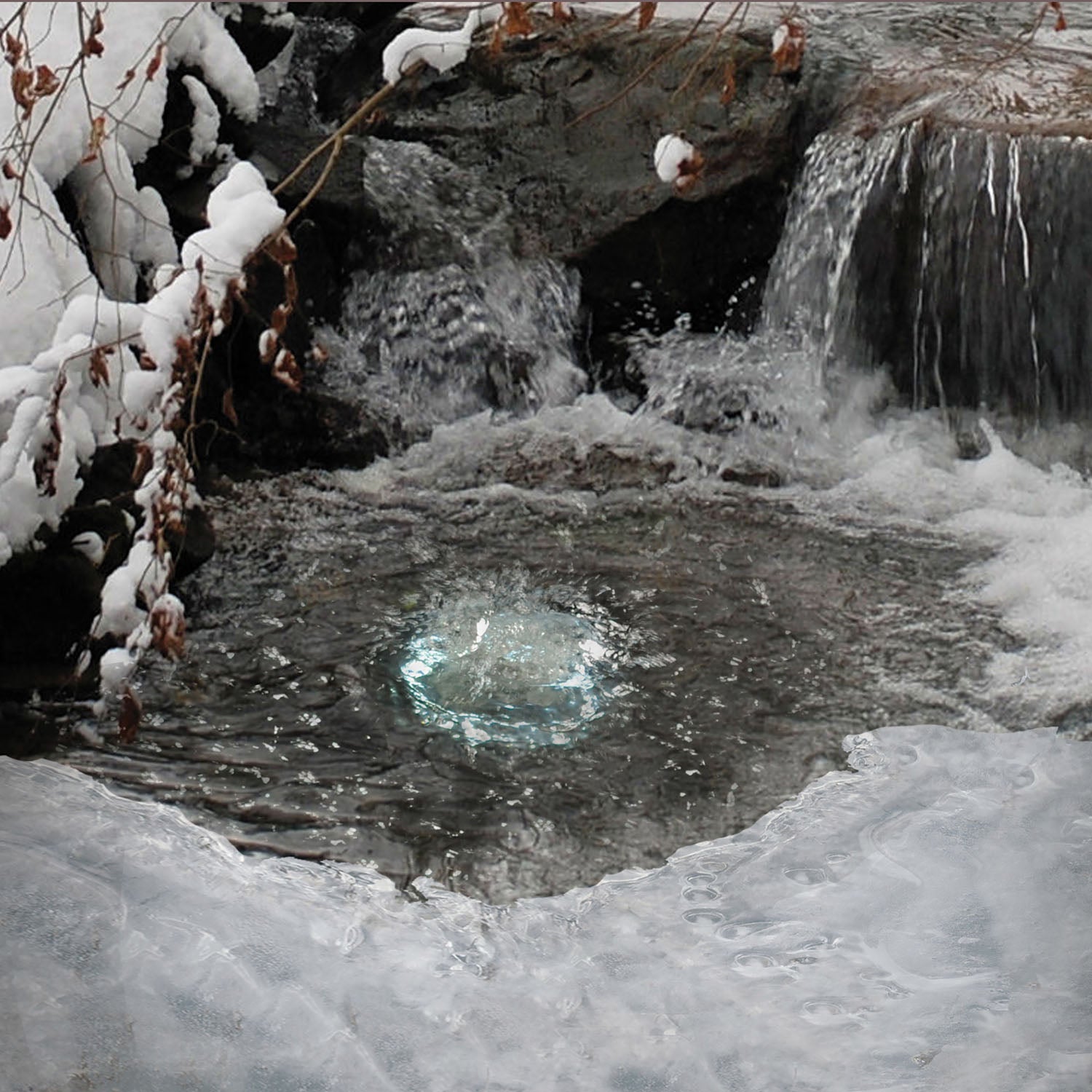
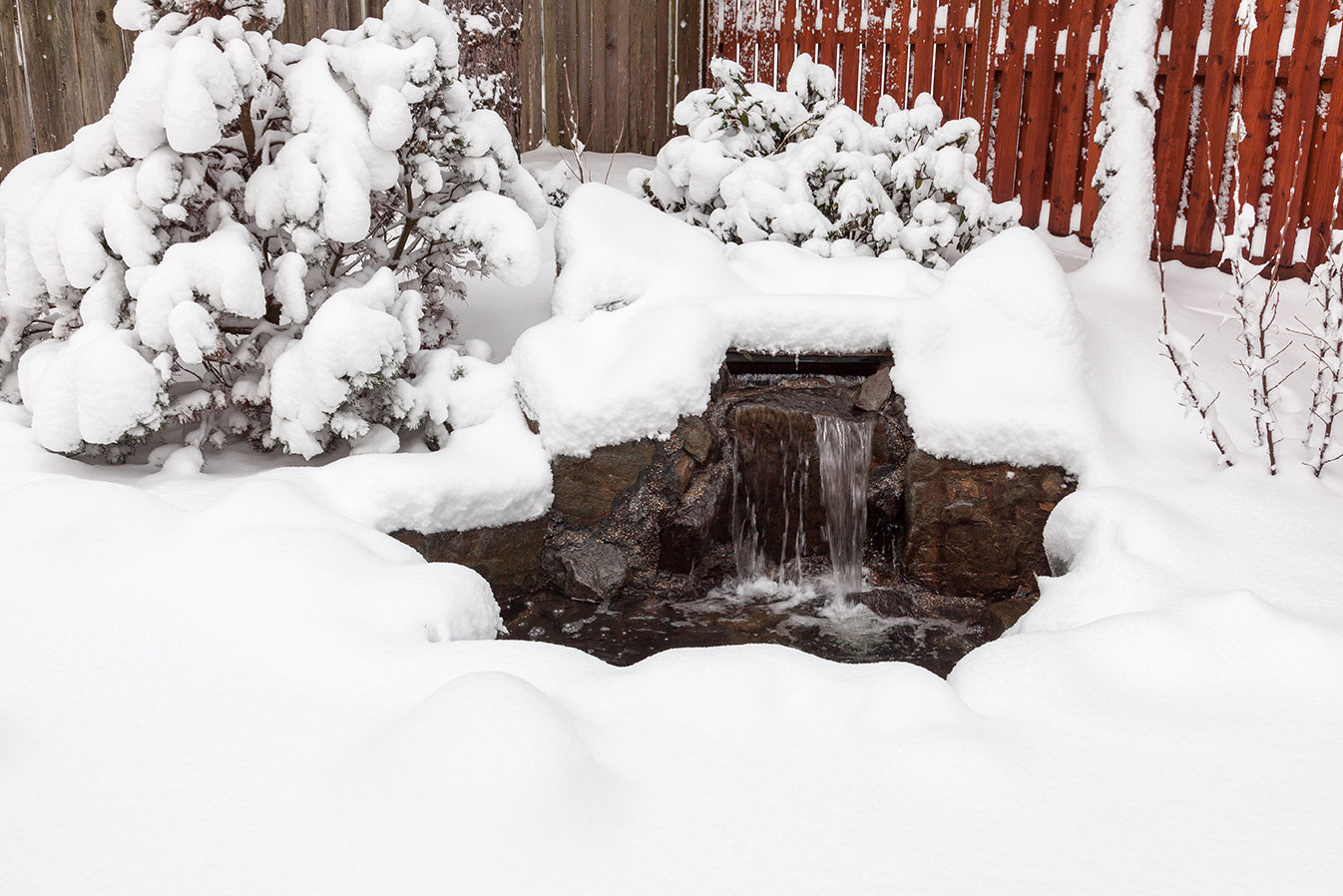
The rest keep a running pond, which takes a lot of care and effort. The reward can be beautiful ice sculptures and a stunning winter vista.
Items to Watch When Running a Winter Pond
- Ice dams: These can form and divert pond water away from your waterfall. If one is forming quickly and your waterfall levels are dropping significantly, it’s time to turn off and remove the pump.
- Water levels: Your usual water supply is often unavailable in winter, since outside pipes, valves, and hoses are shut off to avoid freezing damage. You may need to run a hose from inside your house, or carry buckets of water, to top off the pond every few months.
FAQs on Running a Winter Pond
Won’t my waterfall completely freeze over?
It depends. As long as water runs continuously, a 2,000 gph pump can usually be operated all winter without a problem. It’s vital to confirm that enough water is continuously running through the pump.
Won’t the filters and pipes crack?
If your filter is built from rotational-molded polyethylene and designed to flex and bow with freezing and thawing, it should be fine. PVC flex pipe should also be okay, unless standing water is left in the pipe and allowed to freeze. If your pump runs enough water through the pipe continuously, the moving water won’t freeze.
Not faint of heart? If you’re willing to watch your pond carefully, you’ll be rewarded with a beautiful winter pond.